Where do you put your paddleboard bag and pump while paddling?
Plan where your paddleboard bag and pump will go during a paddle, whether you drive or walk to the launch.
Updated
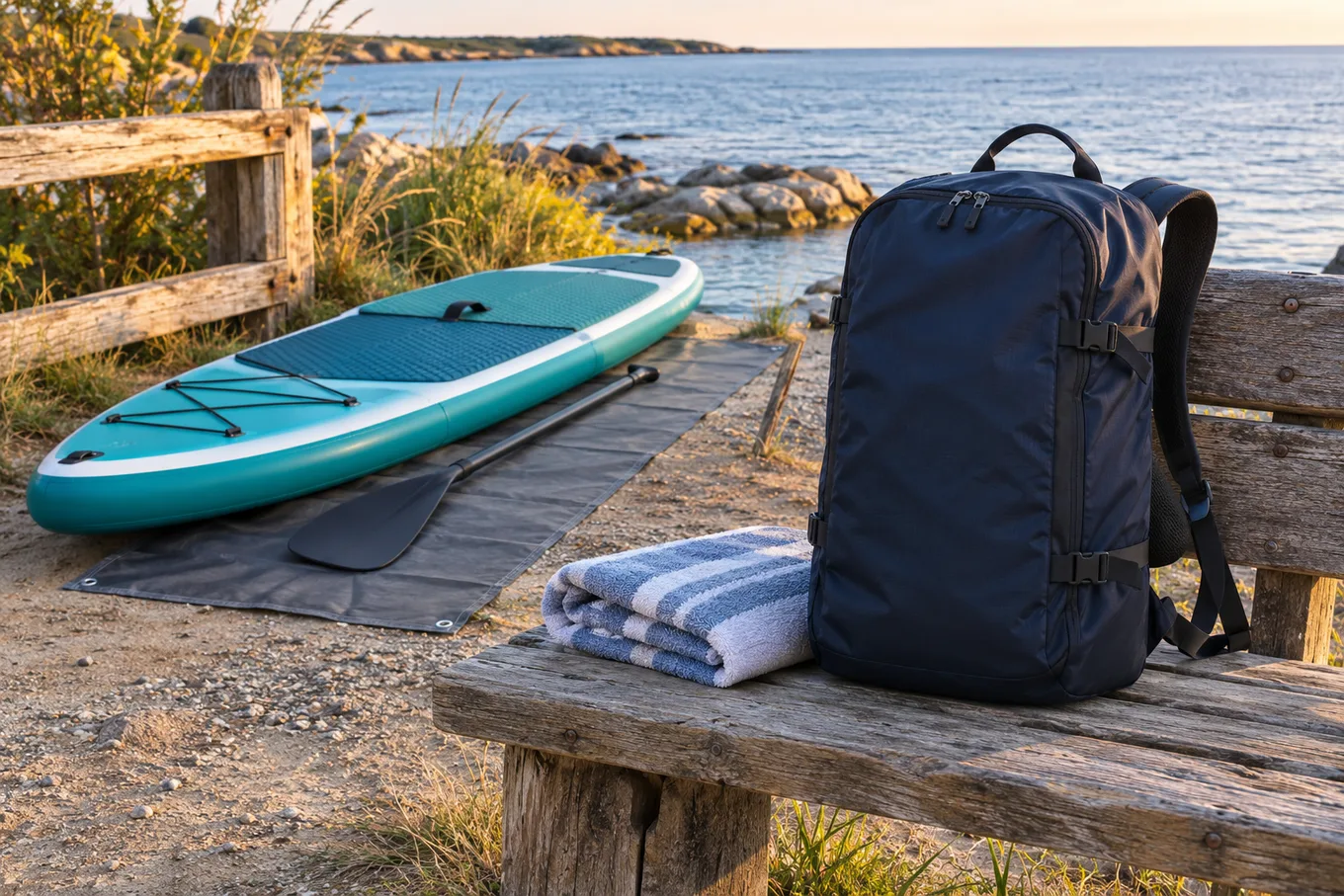
Before walking to a launch with your board in its backpack, decide where the empty bag and pump will go after inflation. If you drive, the vehicle may provide a place for them. If you walk, you need an arrangement that works from the moment the board is ready until you return to shore.
Choose that arrangement before leaving home. It affects how much you carry, what needs protection from water, and which launch will suit the outing.
Start with how you reach the water
| How you arrive | Arrangement to check | What you need to confirm |
|---|---|---|
| Drive and park near the launch | Return unneeded equipment to the vehicle | Parking access and a workable walk back with the board |
| Walk from home with an inflated board | Leave the pump and transport bag at home | A manageable route for the full board |
| Walk with a packed board | Arrange permitted shore storage | Availability, permission, access, and responsibility for belongings |
| Carry equipment on the board | Protect and secure the required kit | Bag protection, load, storage space, and attachment instructions |
Check which arrangements are available at the launch before relying on them.
When you have a vehicle
Think through the order of unloading, inflation, and putting equipment away. If you inflate beside the car, you can plan to return the bag and disconnected pump before carrying the board down. If you inflate at the water, allow for the return trip to the vehicle.
Ask yourself where the inflated board will be during that trip. A plan that requires abandoning it at the launch needs reconsidering. A companion may make the sequence more practical, but both people should understand who has which equipment.
For equipment left in the vehicle, follow its storage instructions and account for the conditions inside the vehicle. For example, NIXY’s Ventus manual specifies a dry environment for use and cool, dry storage. Its requirements should shape where that pump goes after inflation. NIXY Ventus manual
When you walk to the launch
If carrying an inflated board from home is practical, it lets you decide whether the pump and backpack need to travel at all. Walk the entire route in your mind, including the building exit, corners, road crossings, and access to the water. Consider a carry strap or cart only after identifying the part of the route you need help with.
If you arrive with a packed board, ask the launch operator or relevant facility whether storage is available and permitted. Establish when you can retrieve the equipment. Permission to use a space and protection from theft are separate questions, so understand the arrangement before relying on it.
Avoid making unattended shore storage the assumption behind the outing. If no suitable arrangement exists, choose another launch or revise what you bring.
If the kit needs to come on the board
Lay out the empty backpack, pump, hose, and any other equipment you intend to carry. Pack them into the proposed container at home. Measure the closed bundle so you can compare it with the board’s storage area and instructions.
Check the protection requirements of the equipment inside. Sea to Summit instructs users to inspect a roll-top bag’s fabric and coating and make its closure correctly. Check the container’s protection limits against the pump’s water-exposure instructions. Roll-top inspection and closure guidance
Account for your own weight and the entire load when checking the board’s capacity. REI’s buying guide includes carried gear in that assessment. Your board’s instructions should determine where and how equipment can be secured. REI’s paddleboard buying guide
Check the loaded arrangement on shore. Follow the manufacturer-approved attachment method, keep loose straps tidy, and confirm that the equipment leaves the access you need to use the board. If the proposed load cannot be protected or accommodated, change the plan before launching.
Make the return trip part of the plan
Leave enough room to repack after paddling, when the board and other gear may be damp. Decide what you will unpack and dry once you reach home. Keeping damp equipment together for the journey creates another task to finish afterward.
For the next outing, write down where you will inflate, where the pump will stay, and where you will repack. If one is unresolved, work through it before buying more gear. The electric pump decision guide and dry bag sizing guide can help once you know what the trip requires.