Is an electric paddleboard pump worth it?
Decide whether a manual, vehicle-powered, or battery-powered SUP pump suits your launch, carrying needs, and setup routine.
Updated
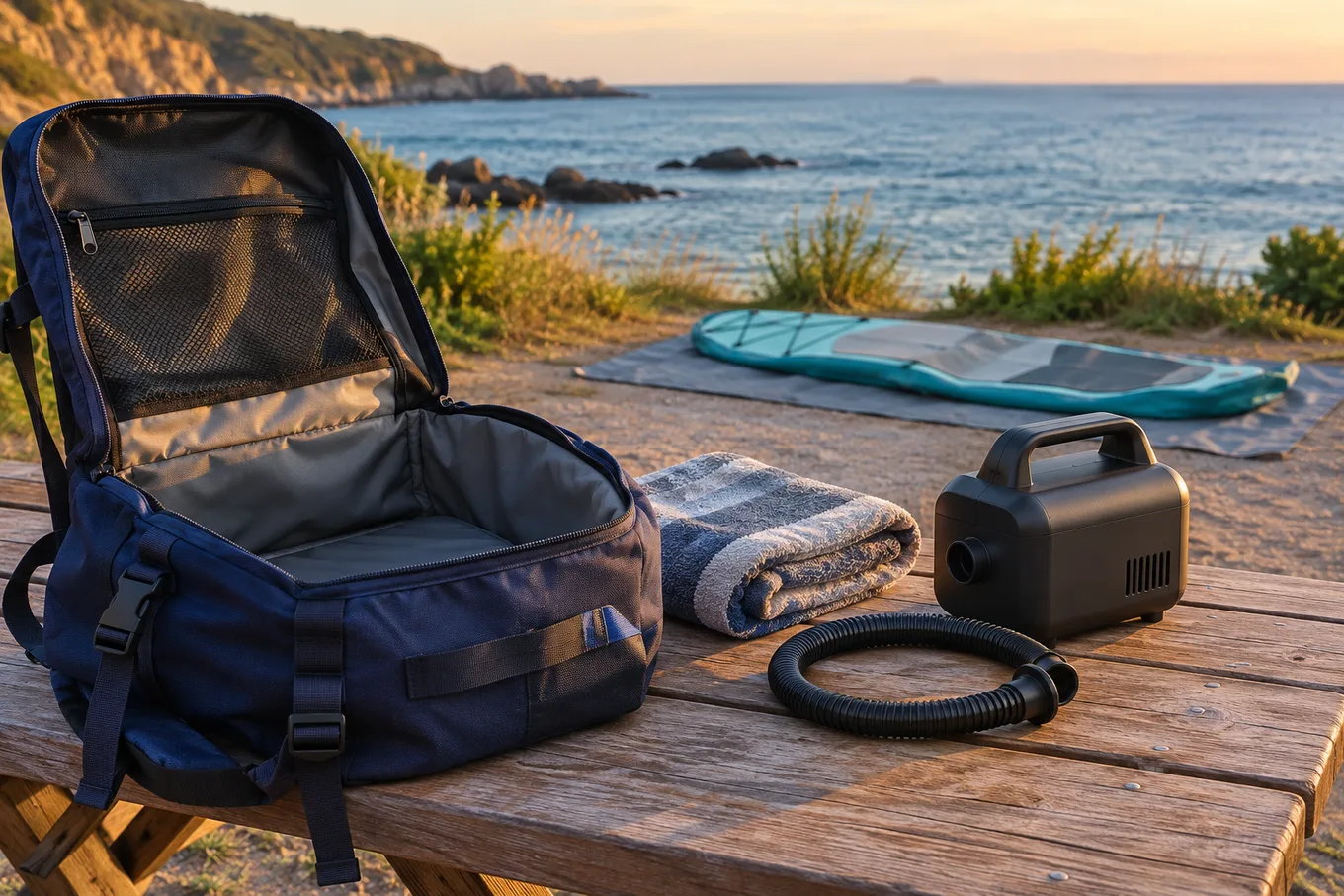
An electric pump is worth considering when hand pumping makes you reluctant to take your board out. The choice depends on where you inflate it and how you get the pump home. A vehicle-powered model can suit a car launch, while a walk to the water makes its power source and carrying weight part of the decision.
Start by looking at the pump you already own. If it gets the board to its recommended pressure with an amount of effort you are happy with, you have a workable setup. An upgrade needs to solve a particular inconvenience.
Choose the power arrangement around your launch
iROCKER describes manual pumps, vehicle-powered electric pumps, and rechargeable arrangements. Powered inflation replaces repeated hand pumping with a device that needs a suitable power supply. Some models let you select a target pressure and stop automatically, but the pump still needs supervision. Check the exact model’s instructions. iROCKER’s pump comparison
| Your usual setup | Arrangement to investigate | Question to answer first |
|---|---|---|
| You are happy using the included pump | Keep the manual pump | Is another device solving a real problem? |
| You inflate beside your vehicle | Compatible 12V pump | Do the pump and vehicle socket specifications match? |
| You inflate away from a vehicle | Battery-powered pump or supported power pack | What must be charged and carried? |
| You walk with an already inflated board | Pump left at home, where practical | Can you carry the board along the whole route? |
A 12V pump ties inflation to a power source
With a vehicle-powered model, check where you can park and where the board can lie during inflation. Think through the distance between the socket and the usable setup area before buying. Ask the manufacturer about the intended arrangement if the supplied cable or hose will not reach.
The NIXY Ventus manual specifies 12V DC operation, a dry environment, supervision, and checking the board’s required pressure. Its instructions also distinguish PSI from BAR, two different pressure units. Those details matter when setting the target. The pump’s maximum capability does not set your board’s recommended inflation pressure. NIXY Ventus manual
Read the vehicle handbook and pump manual together for electrical compatibility. If the combination is unclear, get confirmation before connecting it. An improvised power arrangement adds another unresolved part to the outing.
Battery power moves the charging job home
For a walk-in launch, ask whether the pump includes a battery, accepts a specified external pack, or needs a vehicle supply. Similar product names can describe different arrangements. OutdoorMaster’s core listing for the VORTEX identifies a vehicle-powered model without an included battery, so the word “electric” alone cannot tell you what you can take away from the car. OutdoorMaster VORTEX specifications
Before choosing a rechargeable setup, write down the items that would need to come with you. Include the pump, power pack if separate, hose, and necessary fittings. Ask for their combined weight and packed dimensions. A light board may be appealing, but you will carry the entire kit from home to shore.
Also decide where charging will happen and how you will remember it. A pump that fits your routine should have a clear place in your pre-outing checklist.
Compare the whole purchase
Read the contents list for the exact version sold in the United States. Check whether the price includes the power arrangement you need, the correct hose fitting, and any case shown in the photos. Compare complete setups in U.S. dollars at the time you buy.
For operating limits, look for maximum pressure, any cooling requirements, and the manufacturer’s instructions for repeated inflation. Ask about those limits if you intend to inflate more than one board. Published timings are useful only with the board size, target pressure, and power conditions that produced them.
Use those details to judge whether the complete setup solves your problem. This guide draws on manufacturer documentation, with no Paddle Goals timing or battery tests.
Plan what happens after inflation
Before ordering, decide where your pump and board bag will go while you paddle. A pump that requires dry conditions needs an appropriate place after use too.
If your reason for shopping is a pressure gauge that stays at zero, work through the pump gauge troubleshooting guide first. The current pump may simply need a setup check.