How to clean and dry an inflatable paddleboard in an apartment
A practical apartment routine for rinsing, drying, and storing an inflatable paddleboard when space is limited.
Updated
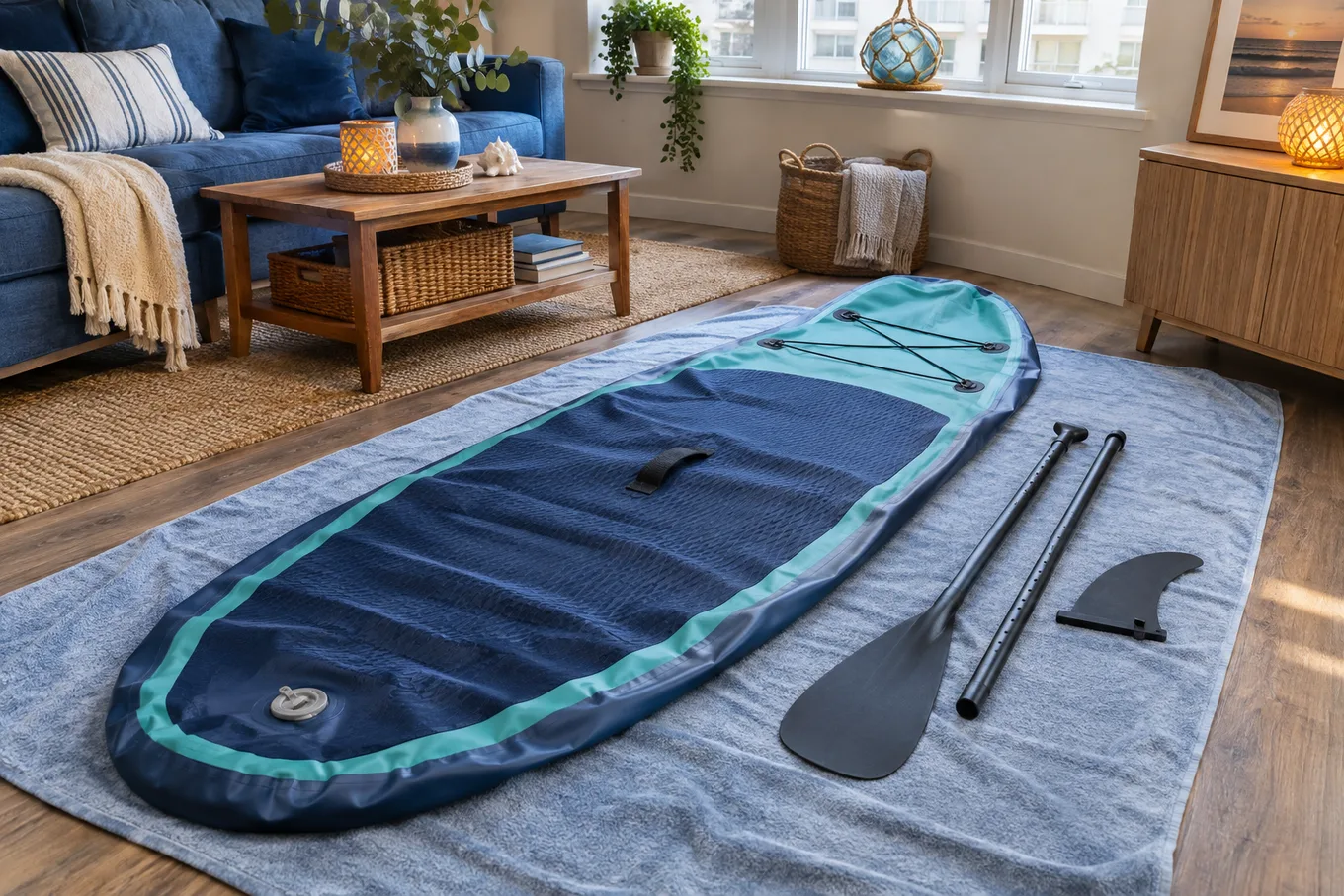
A paddleboard may fit in your closet when it is rolled up, but cleaning day needs space for the open board too. Before carrying a damp board upstairs, decide where you can unpack it, protect the floor, and reach both sides. Treat the journey home as a temporary packing stage, followed by a separate drying stage.
The routine below applies published care guidance to apartment logistics. Adapt it to your board’s manual and the space you have available.
Set up the drying space before your outing
Walk the route from your front door to the place where the board will dry. Check the turns with the board’s full length in mind. A clear living-room floor may give you room to work. A narrow hallway might block the route everyone needs to use.
Choose a location where moisture will be manageable and the board can be inspected. REI identifies sunlight, moisture, and excessive heat as storage concerns. Avoid choosing a drying spot beside a heater simply because it seems convenient. Follow the care instructions for your particular board when deciding how to position it. REI’s SUP storage guidance
Prepare a clean towel for the board and something suitable to protect the floor. Keep enough spare floor space to move around it. If your proposed spot only accommodates one tightly folded end, find another arrangement before heading out.
Remove what you can at the launch
Before packing, look for grit around the fins, straps, handles, and deck pad. Shake loose debris from the empty transport bag so the board does not go straight back into a sandy container.
NRS recommends cleaning and drying an inflatable SUP before transport or storage, with freshwater rinsing particularly relevant after saltwater use. For grime, use the cleaning method approved for your board. NRS discusses soap and water, but your own manufacturer’s instructions should determine the cleaner you choose. NRS inflatable SUP care
If freshwater is available and its use is permitted, doing the rinse before returning to an apartment can reduce what you need to handle indoors. If the launch lacks a suitable facility, plan how you will carry water or complete cleanup at home. A public restroom or shared apartment area requires permission and a workable way to leave it clean.
Unpack the board when you get home
If you had to pack the board damp, put the bag somewhere that reminds you to finish the job. Leaving it beside the drying space gives the next action a clear place.
Open the bag and separate the equipment. Put the pump somewhere dry, set the paddle and removable fins aside, and inspect the bag itself. Follow the board manual for removing and reinstalling accessories. A dedicated spot for each item helps you notice what still needs attention before it disappears into the closet.
Choose a manageable sequence if the room cannot accommodate everything at once. For example, you could deal with the board first, then use the same protected area for the bag and accessories.
Check both faces and the places that hold moisture
Work methodically from nose to tail. Inspect the underside, deck pad, handles, attachment points, and the folds that were tucked inside the bag. Move the board as its manual allows so you can reach the surface that was against the towel or floor covering.
Use the manufacturer’s drying guidance and check the equipment itself before packing. Drying time depends on your board, ventilation, and room conditions. Put a reminder in your phone if you need to step away, then return to inspect the areas you could not reach on the first pass.
Keep the bag and accessories in the routine. A dry board can be ready for storage while the damp transport bag still needs attention.
Pack for the next trip
Before closing the bag, confirm that the board is clean and dry, the accessories are accounted for, and the storage location meets its manual’s requirements. Roll or fold it according to those instructions, keeping removable hard parts in their intended compartments.
If the cleanup routine reveals that your home has room for a packed board but very little working space, include that constraint in your next purchase. The compact paddleboard comparison helps with storage measurements, while the bag and pump guide covers what to do with the rest of the kit at the launch.
For your next outing, add one preparation step to your first-paddle plan: leave the drying space ready before you walk out the door.